
DN nominal diameter
Nominal diameter of the connection, expressed in millimetres (e.g. DN 50). It denotes the internal size of the pipe and fitting and is used to determine the flow capacity of the system.
Definitions of the core technical concepts used when selecting valves, fittings, pumps, separators and equipment for process systems. Use the search to find a term quickly.
 Terms
Search is diacritic-neutral — you can type with or without the letters č, ć, š, ž, đ.
Nominal diameter of the connection, expressed in millimetres (e.g. DN 50). It denotes the internal size of the pipe and fitting and is used to determine the flow capacity of the system.
Nominal pressure (e.g. PN 10 / PN 16 / PN 40) — the pressure class for which the fitting is certified at standard temperature. Selected according to the operating conditions of the system.
Maximum flow characteristic of a control valve with the plug fully open and a pressure drop of 1 bar. A key parameter for sizing control valves.
A thermoplastic polymer with chemical resistance, used in fittings, pumps and piping for systems with mildly to moderately aggressive chemical media. Typical temperature range: −20 to 80 °C.
A fluoropolymer with exceptional chemical resistance, used for the most demanding media and higher temperatures (typically up to around 120 °C). Often combined with PTFE sealing.
Steel alloys with chromium and nickel (most commonly AISI 304 and 316) — used where mechanical strength is required together with good corrosion protection and hygienic standards.
Liquid media whose chemistry (acids, bases, oxidisers) attacks standard materials. They require the selection of special materials (PP, PVDF, PEHD, INOX, PTFE).
A fitting with a variable-travel plug that controls flow, pressure or temperature in a process system. It is driven by a pneumatic or electric actuator with a positioner.
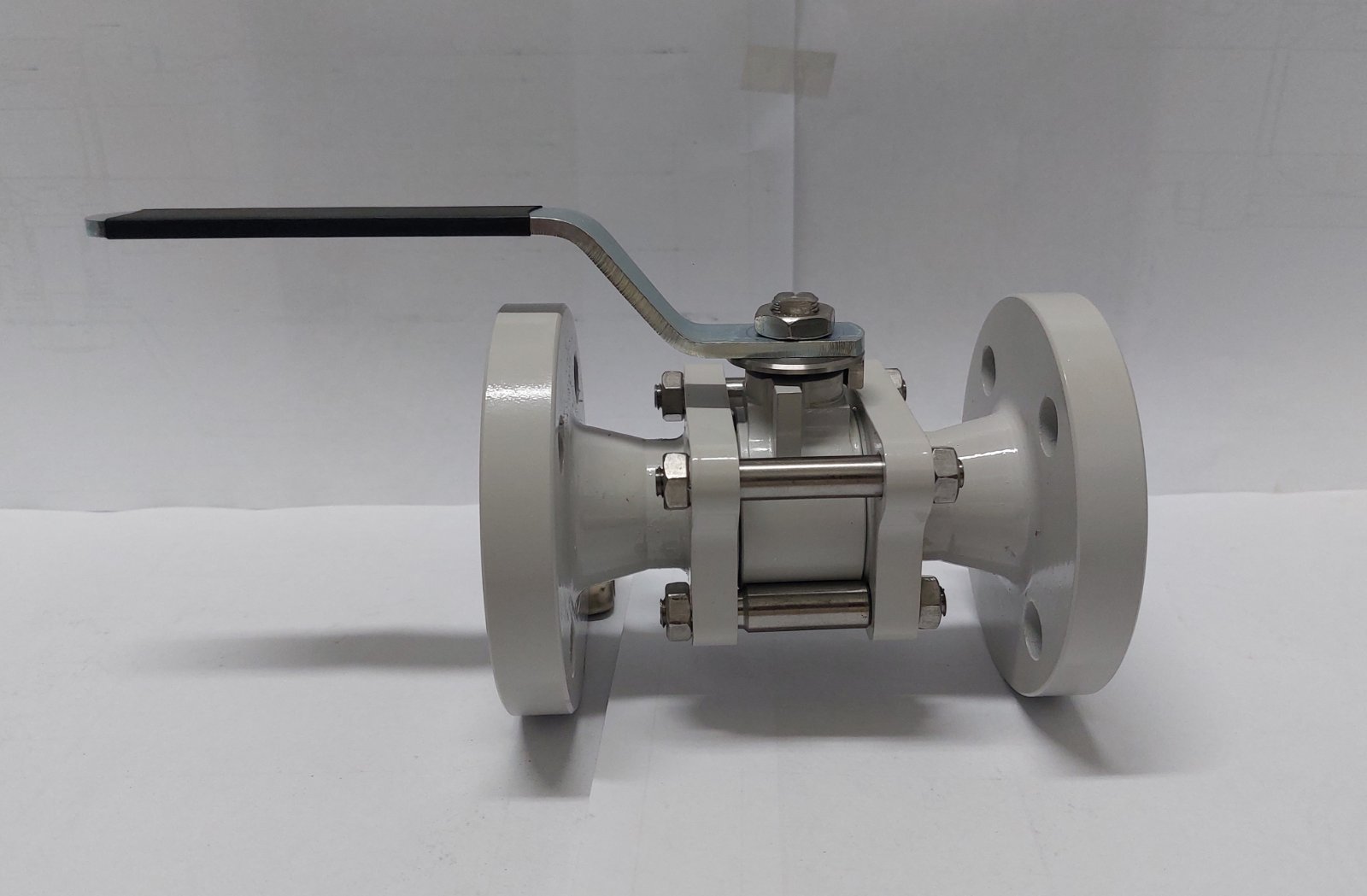
A quick-closing fitting with a rotating ball — used to shut off flow with a 90° turn. Manufactured as standard in two-piece and three-piece designs.
A single-stage pump with a volute casing and an open or closed impeller. In KB Armature's range, it is built from chemically resistant materials (PEHD/PP/PVDF) with an SiC mechanical seal.
A device for separating mineral oils and contaminants from wastewater in industrial and utility systems. Most commonly produced in PEHD/PP.
A material that provides the leak-tightness of a fitting (EPDM, FPM/Viton, PTFE, graphite). The choice depends on the medium, temperature and pressure.
A standard demountable joint between a fitting and the piping. KB Armature uses EN 1092 / DIN 2501 standards (e.g. PN 10 / PN 16).
The working fluid passing through the system — water, steam, air, acids, bases, oils, gases. The type of medium directly affects the choice of material and type of fitting.
The temperature range over which the fitting or pump can be used safely. It significantly affects the choice of body material and sealing.
The quantity of medium passing through the fitting or pump per unit of time. A key parameter for sizing the pump (together with the head H) and the valve (together with KVS).
The operating pressure in the system — used together with temperature to select the PN class of the fitting and its constructive material. Typically PN 10 / 16 / 25 / 40.
A diagram showing head (H) as a function of flow (Q) for a given pump type and rotational speed (e.g. 1450 or 2900 rpm). Used to select the pump's operating point.
Send a technical inquiry with your specific question — the KB Armature team will explain the term and propose an appropriate solution.